
Analog vs digital clock explained simply—compare accuracy, readability, learning benefits, and modern usability to choose the right clock for your needs.
I’ve lived with both an analog clock on my office wall and a digital projector clock by my bed. When you’re choosing between an analog vs digital clock, the real question is how and where you’ll read time. I tested both for weeks across work, kitchen, and bedroom. Below, I’ll share what stood out so you can pick the best fit for your daily rhythm.

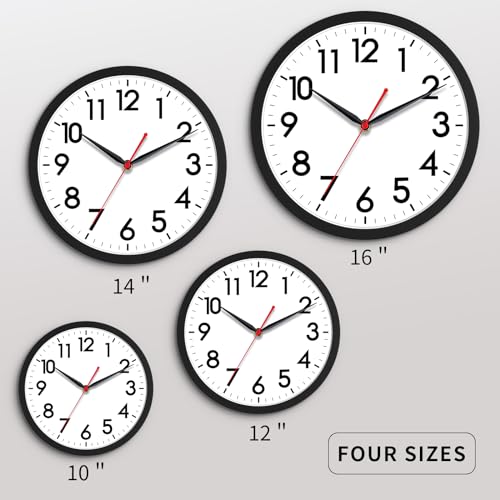
AKCISOT Wall Clock 10 Inch…
Easy to See: Designed with big numerals by AKCISOT. Keep Time Accurate: AKCISOT clock movements undergo thorough testing before being offered for sale. Silent: Features…

Digital Projection Alarm Clocks for…
🥰180° 𝗥𝗢𝗧𝗔𝗧𝗔𝗕𝗟𝗘 𝗦𝗪𝗜𝗩𝗘𝗟 𝗣𝗥𝗢𝗝𝗘𝗖𝗧𝗢𝗥✨–Designed with 180° rotatable swivel projector and projects ultra-clear time onto wall or ceiling within the optimum projection distance 1.6-9.8ft, allowing you…
Is analog clock Good?
Yes—especially if you want calm, glanceable time with zero glare or blue light. An analog clock is good for home offices, living rooms, and classrooms. It shines when you want a quiet, battery-powered, reliable solution. It also helps kids (and adults) feel the passage of time, not just read digits.
In my office, the analog face helps me judge “half past” and “five minutes left” without thinking. In the kitchen, I glance from across the room and see if the minute hand has swung far enough. It’s low-tech in the best way—simple, silent, and steady.
What Makes It Stand Out / Key Features
- Silent, non-ticking quartz movement for a quiet room
- Bold analog face for quick, at-a-glance reading
- Battery-operated reliability during outages
- Lightweight design with simple wall mounting
- Classic style that blends with most décor
What I Like
- No light at night—great for sleep and dark rooms
- Intuitive sense of time passing (great for managing work blocks)
- Runs for months on a single battery
- Readable from many angles with no glare
- Simple to use—no menus, no settings
- Quiet spaces stay quiet thanks to non-ticking movement
What Could Be Better
- No built-in alarm or snooze
- No automatic DST change
- Not ideal for precise second-by-second timing
My Recommendation
If you prefer calm spaces, analog is a win. It’s perfect for living rooms, offices, and learning time, and it works even when power goes out.
| Best For | Why |
|---|---|
| Minimalist, calm rooms | No lights, no sounds, simple face |
| Kids learning time | Shows the passage of minutes and hours |
| Power outage readiness | Battery-powered and dependable |
Is digital clock Good?
Yes—especially for bedrooms and anyone who needs alarms, dimming, or a bold readout. A digital clock is great for heavy sleepers, night readers, and people who want precise time at a glance. The digital projection model also solves the “roll over to see the time” problem.
On my nightstand, the large LED and ceiling projection kept me from picking up my phone at 3 a.m. Dual alarms help me separate gym days from workdays. The dimmer kept the room dark enough, while the battery backup saved the time during brief outages. It’s a high-convenience pick.
What Makes It Stand Out / Key Features
- Large LED display for instant readability
- 180° rotatable projector for ceiling/wall time
- 5-level dimmer to control brightness
- USB charging port for phones
- Dual alarms, snooze, 12/24H, DST, battery backup
What I Like
- Super clear time from bed or across the room
- Ceiling projection ends midnight phone checks
- Loud dual alarms help heavy sleepers
- DST support reduces clock fuss twice a year
- Battery backup protects time settings
- USB charging declutters the nightstand
What Could Be Better
- Needs an outlet; not ideal for off-grid spots
- Even dim light can bother very light-sensitive sleepers
- More settings mean a slightly longer setup
My Recommendation
If you want alarms, projection, and precise time, choose digital. It’s the bedroom champ and a great everyday convenience.
| Best For | Why |
|---|---|
| Bedrooms and night use | Big display, dimmer, projection, alarms |
| Heavy sleepers | Loud dual alarms and snooze |
| Travel or time changes | DST support and backup battery |
analog vs digital clock: Side-by-Side Test
I compared both daily in real rooms. This analog vs digital clock test focused on how fast I could read time, how well each fit a space, and which one I relied on more at night and during outages.
Readability & Speed: Can You Read It Instantly?
A quick read matters when you’re rushing out the door.
| Scenario | Analog Clock | Digital Clock |
|---|---|---|
| Across a bright room | Clear hands, great contrast | Large digits pop instantly |
| In the dark | No light source | Dim or project to ceiling |
| Peripheral glance | Strong sense of “about X” | Exact time, if you look straight |
| Exact seconds | Approximate only | Exact seconds shown (if supported) |
Ratings: Analog clock – 8/10 | Digital clock – 9/10
Digital has the edge for instant precision and night reading in this analog vs digital clock matchup.
Accuracy & Precision: Which Keeps Truer Time?
Both use quartz-based timing in most home models.
| Aspect | Analog Clock | Digital Clock |
|---|---|---|
| Time drift | Low drift (quartz) | Low drift (quartz) |
| Reading precision | Nearest minute | Exact minute/second |
| DST handling | Manual change | DST option available |
| Everyday reliability | Excellent | Excellent |
Ratings: Analog clock – 8/10 | Digital clock – 9/10
Both keep good time, but digital is easier to read precisely in the analog vs digital clock comparison.
Power & Reliability: What Happens in an Outage?
Power affects where and how you can use each clock.
| Power Source | Analog Clock | Digital Clock |
|---|---|---|
| Primary power | AA battery | Wall outlet |
| Backup | N/A (always battery) | Battery backup for time |
| Outage behavior | Runs as usual | Keeps time; display may turn off |
| Placement flexibility | Anywhere | Near an outlet |
Ratings: Analog clock – 9/10 | Digital clock – 8/10
Analog wins for pure independence, a key note in the analog vs digital clock debate.
Noise & Light at Night: Sleep-Friendly?
Bedrooms need quiet and low light.
| Factor | Analog Clock | Digital Clock |
|---|---|---|
| Noise level | Silent (non-ticking) | Silent operation |
| Screen brightness | None (dark) | Adjustable; can be very low |
| Night visibility | Needs ambient light | Built-in display or projection |
| Light sensitivity | Ideal for dark rooms | Lowest dim still visible |
Ratings: Analog clock – 9/10 | Digital clock – 8/10
Analog is best for total darkness; digital wins if you want night visibility in the analog vs digital clock choice.
Features & Alarms: Which Does More?
Extra functions can change day-to-day use.
| Feature | Analog Clock | Digital Clock |
|---|---|---|
| Alarms & snooze | No | Dual alarms + snooze |
| Projection | No | 180° projector |
| Time format | 12-hour face | 12/24H selectable |
| Extras | Classic design | USB charging, DST, dimmer |
Ratings: Analog clock – 6/10 | Digital clock – 10/10
Digital runs away with features in this analog vs digital clock showdown.
Learning & Time Awareness: Teaching and Planning
How each clock helps you sense time.
| Use Case | Analog Clock | Digital Clock |
|---|---|---|
| Teaching kids | Great for understanding time | Good for reading numbers |
| Timeboxing tasks | Easy “quarter/half hour” sense | Exact start/stop times |
| Glance planning | Strong visual cues | Precise but less “feel” |
| Habit building | Supports pacing | Supports precision |
Ratings: Analog clock – 9/10 | Digital clock – 8/10
Analog nudges better time awareness; a helpful win in analog vs digital clock decisions.
Style & Décor: How Do They Look?
Style can make or break a room.
| Aspect | Analog Clock | Digital Clock |
|---|---|---|
| Design vibe | Classic, warm | Modern, functional |
| Blend with décor | Very versatile | Best in bedrooms/offices |
| Wall presence | Decorative focal point | Compact, utilitarian |
| Visual clutter | Clean and simple | Digits stand out |
Ratings: Analog clock – 9/10 | Digital clock – 7/10
Analog usually looks better on walls, a style edge in analog vs digital clock picks.
Value for Money: Best Use per Dollar
What you get for your spend.
| Value Area | Analog Clock | Digital Clock |
|---|---|---|
| Price to function | Excellent for basics | Great for features |
| Longevity | Very long on simple parts | Long; more components |
| Maintenance | Replace battery | Settings + power needs |
| Overall value | Top for simple needs | Top for feature-seekers |
Ratings: Analog clock – 9/10 | Digital clock – 9/10
Call it a tie—pick based on needs in this analog vs digital clock value check.
Final Verdict: Which Should You Buy?
Choose the analog clock if you want calm rooms, zero light at night, and a strong sense of time passing. analog vs digital clock is simple, stylish, and keeps working during outages.
Pick the digital clock if you want alarms, projection, easy night reading, and exact precision. For bedrooms and busy mornings, digital is hard to beat in the analog vs digital clock decision.
FAQs Of analog vs digital clock
What is the main difference between analog vs digital clock?
Analog shows time with hands and a dial. Digital shows numbers on a screen. Analog is great for a sense of time. Digital is best for precise reading and features.
Which is better for bedrooms in the analog vs digital clock debate?
If you need night visibility and alarms, digital. If you want a totally dark room, analog.
Are analog vs digital clock options equally accurate?
Most home models use quartz and keep time well. Digital is easier to read precisely, but both are accurate enough for daily life.
Which is better for kids—analog vs digital clock?
Analog teaches how time works. Digital helps kids read exact numbers fast. Many parents use both.
What about power and outages in analog vs digital clock choices?
Analog runs on a battery and keeps going. Digital needs an outlet but often has a battery backup to save settings.